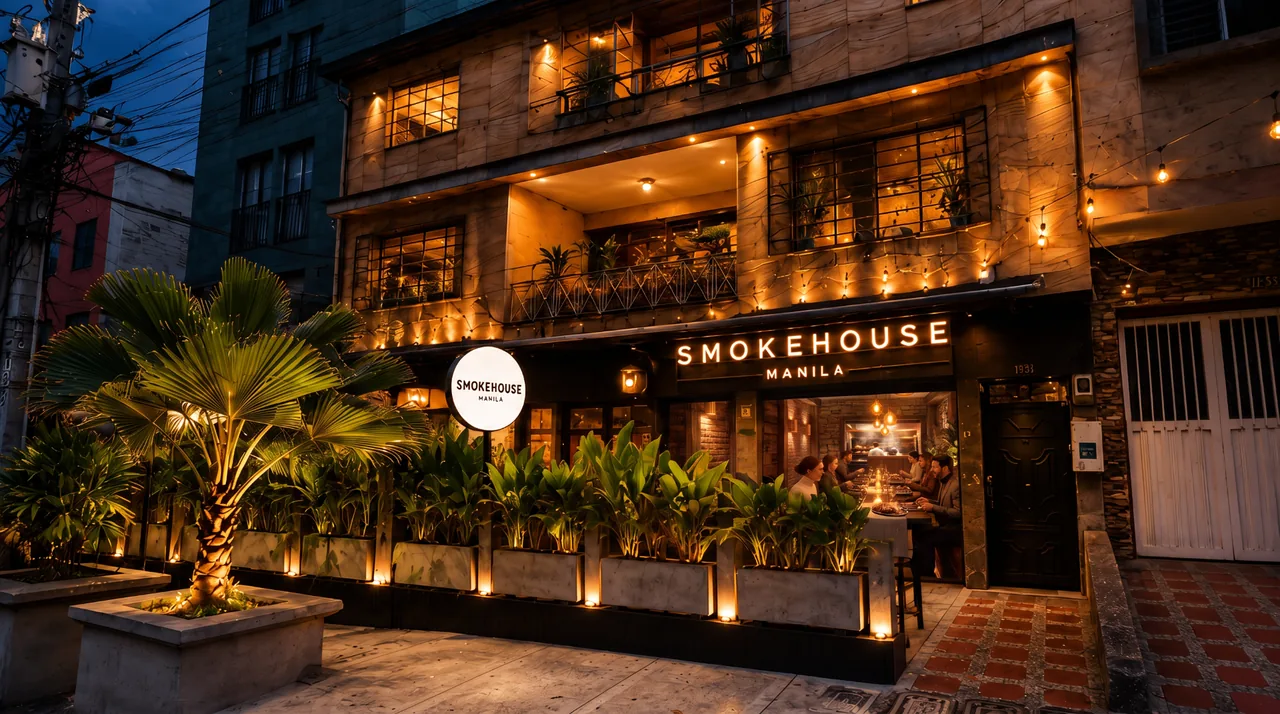


The Smokehouse Manila storefront at night, doors open and warm lights on, on a plant-lined street in Barrio Manila, El Poblado, Medellín

El Poblado · Medellín · Colombia

Texas smoke.Medellín soul.

A 55–70-seat accessible-premium smokehouse in Barrio Manila — acquired turnkey from the former Viva Italia at Cra. 43E #11-49. Churrasco theater without the churrascaria cost structure, on a lease at 2.3% of sales.

The numbers
COP 250M
total opening capitalization (≈ USD 82K)
40.7%
base unit EBITDA margin
2.3%
rent-to-sales — below-market lease
40
covers/day to break even

Confidential — prepared for invited investors

The concept

Premium technique, made casual

The concept takes the craft and theater of premium live-fire dining — pit-smoked meats, tableside carving, curated wine and open-flame cooking — and re-engineers it into an accessible-premium restaurant built for speed, consistency and a lower guest check. Central Texas smoking technique is the production backbone, with brisket, ribs and pork cooked low and slow for deep bark, smoke and yield discipline. Brazilian-style picanha carving adds selective tableside theater Thursday through Sunday, while Mexican parrilla and street-food accents bring char, acid, chile and freshness across sides, sauces and shareable plates. The model avoids all-you-can-eat economics, oversized kitchen brigades and high protein waste, delivering a distinctive smokehouse experience with leaner labor, tighter food cost and broader everyday appeal.

The pit is the factory

Barbecue is batch production: brisket, ribs and pork smoke ahead on a one-day forecast cycle; service is carving and assembly. That is the structural trick that halves labor — the benchmark Texas counters run on a slicer and a cashier.
Theater, scheduled

Table-side picanha passes and board presentations Thursday–Sunday dinner — the churrasco moment guests photograph, without continuous rodizio labor or protein waste.

Wine, not a bar

8–12 South American labels, 4–6 by the glass. Chile and Argentina dominate Colombia’s import market — high-margin check builder with zero bar complexity.

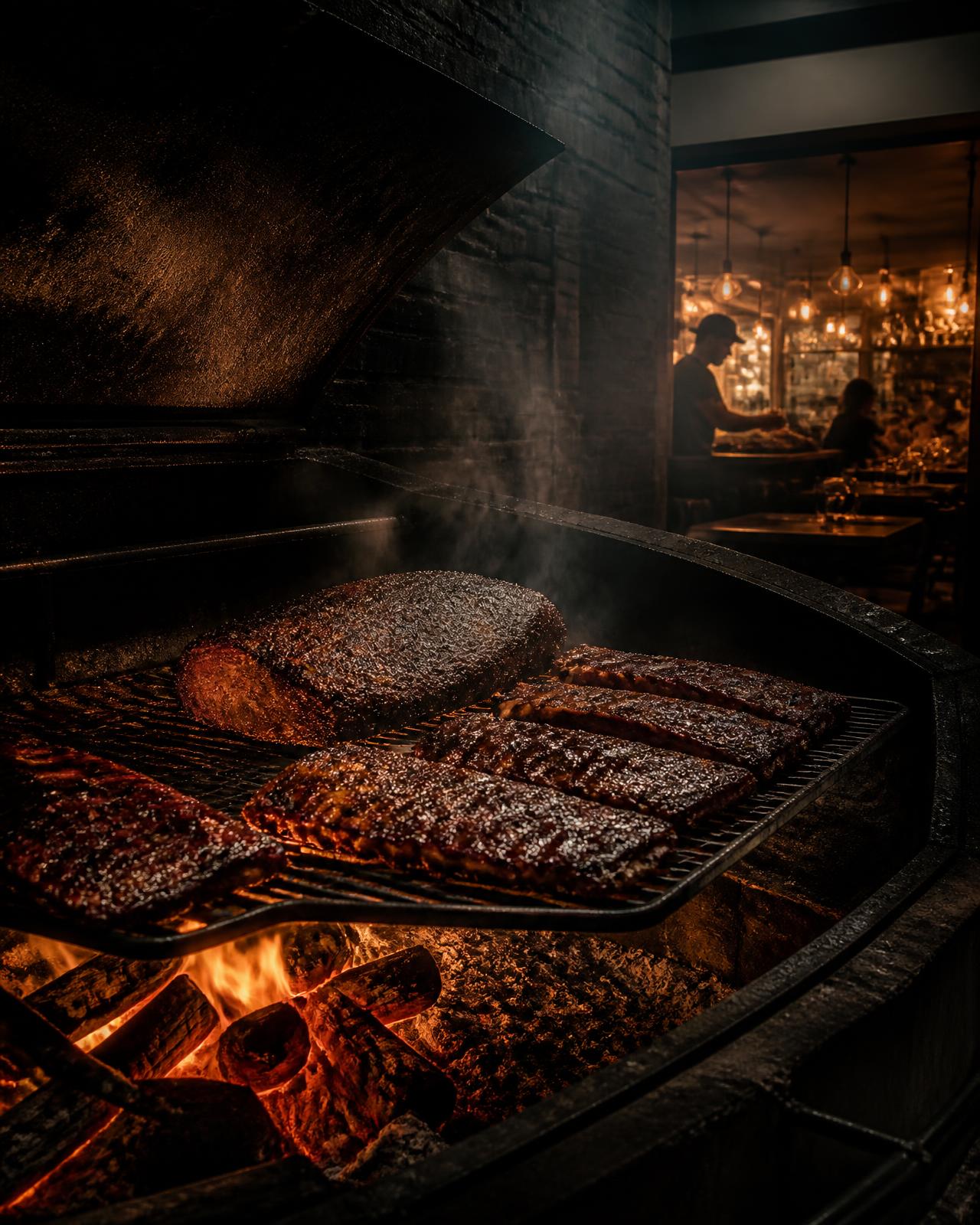
THE PIT LINE — Ember & oak, open to the room
THE PIT LINE

Ember & oak, open to the room

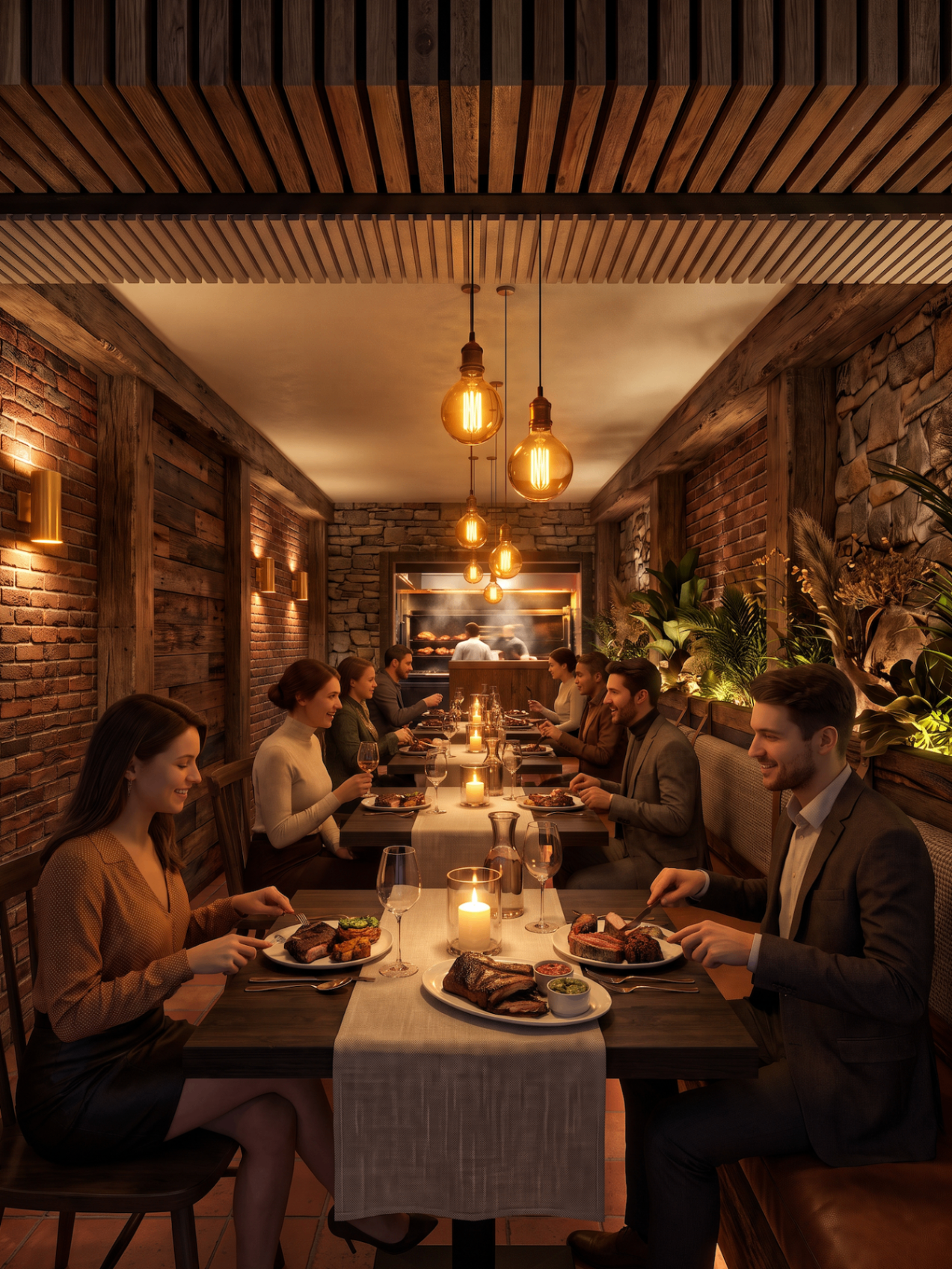
MANILA NIGHTS — The dining room — rattan light, lime-washed stone, neon
MANILA NIGHTS

The dining room — rattan light, lime-washed stone, neon

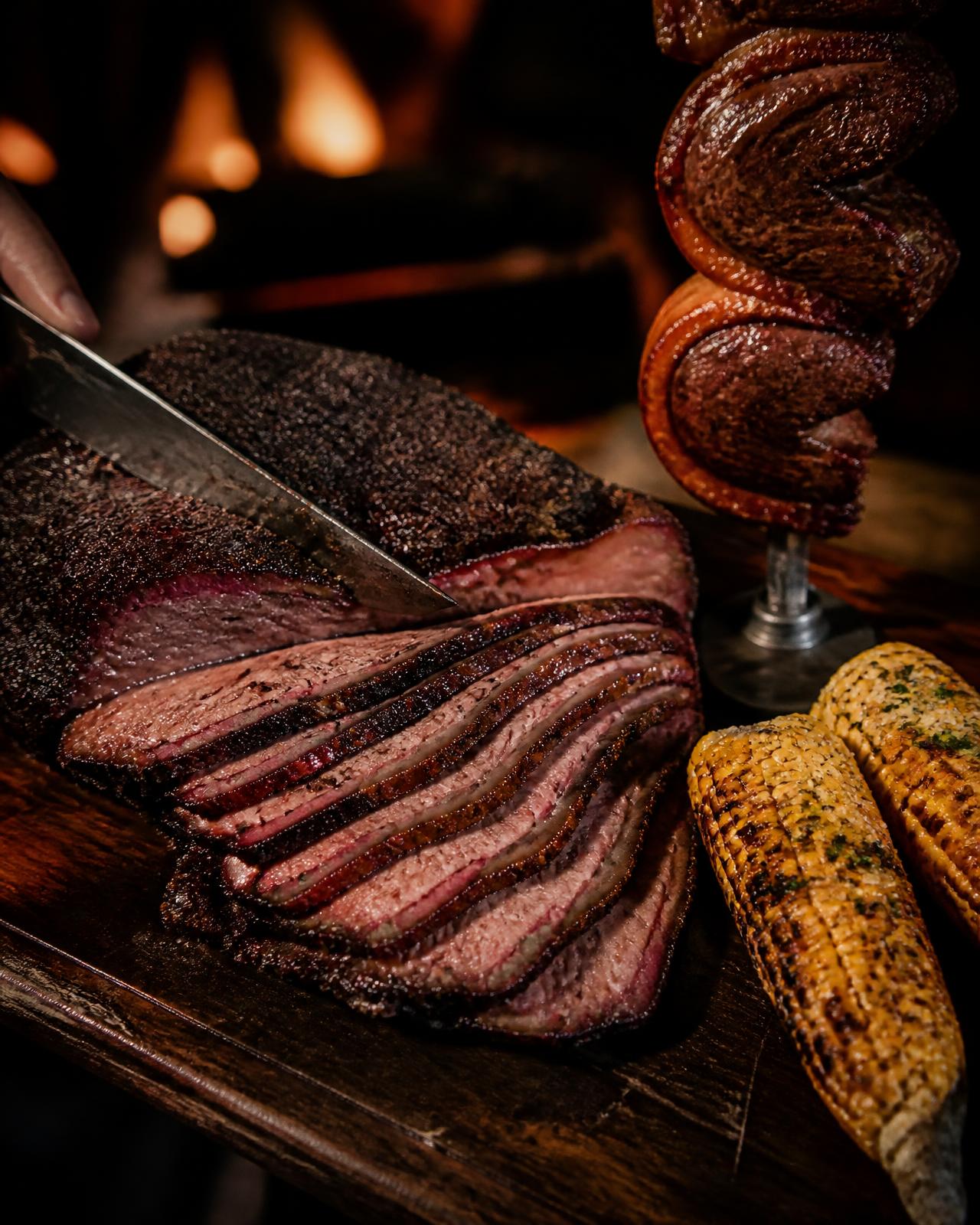
THE CARVE — Brisket by the slice, boards for the table
THE CARVE

Brisket by the slice, boards for the table

Establishment photography — Barrio Manila façade and dining room; pit and carve are concept art direction.

The three-gate menu rule

Corn is never plain. Corn is elote.

Every SKU passes three gates — trend, theme, margin — at held quality. The template: mazorca bought weekly at Central Mayorista on DANE-SIPSA price bulletins, smoked, charred, dressed crema-mayo, costeño cheese and chile-lime. A low-cost local input, transformed by technique into a signature side at a 78–84% contribution margin. Esquites cup for takeaway. The whole sides program is engineered this way — sides at 18–22% food cost buy down beef-heavy plates to a 33% blended COGS.

TRENDMexican street food is in global expansion — trade-press documented
THEMEIt bridges the Texas–Mexico smoke story on one board
MARGINBest contribution margin on the menu, verified weekly vs SIPSA

The micro-market

The wealthiest square kilometers in Medellín

Barrio Manila sits between the Golden Mile hotel corridor and Parque Lleras — inside Comuna 14 (El Poblado), where 92.6% of housing is in Colombia’s top two socioeconomic strata and the living-conditions index is the city’s best. Layer on a record international visitor flow led by the one source market that needs zero education on brisket: the United States.

92.6%of housing in estrato 5–6 — city’s wealthiest commune (Alcaldía ficha)
115,872residents, Comuna 14 (2025 official projection)
1.2Mforeign tourists in Medellín 2025 — all-time record
32%of visitors are American — largest source market
≈427verified hotel keys within ~6 blocks — ≈496 in-house guests a night
16.7%Medellín poverty rate vs 28.0% national (DANE 2025)

The Manila demand map

Target siteComp restaurantsInvestor-benchmark staysDemand anchors

Schematic, not to scale. Feeder properties & comps verified Aug 2026.

The economics — FINAL acquisition model

We stopped building. We bought the restaurant.

The former Viva Italia at Cra. 43E #11-49 is available as a going-concern contents package — ovens, kitchen line, refrigeration, tables, chairs — at COP 100M (≈ USD 33K) one time, 95% turnkey, on rent of COP 4.0M/month plus utilities. That single fact converts a construction project into an operating conversion: no 6–8 weeks of build, no civil works, and occupancy at 2.3% of base sales against a Manila asking band of COP 6.8–12.5M (≈ USD 2.2–4.1K). Every column below foots exactly; every anchor is cited under Sources.

COP 100MBUY-IN — TURNKEY ACQUISITION≈ USD 33K one time · 95% turnkey contents
COP 250MTOTAL OPENING CAPITALIZATION≈ USD 82K · 50/50 = COP 125M (≈ USD 41K) per side
COP 71.2M/moBASE UNIT EBITDA≈ USD 23.3K/mo · 40.7% margin
~30 covers/dayBREAK-EVEN~COP 64M (≈ USD 21K) net/mo · ≈37% of base · 60 seats

Buy-in: what COP 250M funds (COP M · USD K)

  • Business acquisition (95% turnkey)
    100$33K
  • Diligence, legal & lease deposit
    15$4.9K
  • Theme conversion & signage — the “5%”
    20$6.5K
  • Pit, extraction, kitchen gaps & POS (equipment in hand)
    40$13K
  • Opening inventory, pre-opening payroll, launch
    15$4.9K
  • Contingency (~10% of conversion scope)
    10$3.3K
  • Working capital reserve
    50$16K
Total opening capitalizationCOP 250M$82K
Per side — 50/50 with DCT Global GroupCOP 125M$41K

Capitalization is down ~39% from the COP 410M (≈ USD 134K) draft and ~67% from the superseded COP 752M (≈ USD 246K) ground-up build. The pit, extraction and kitchen scope collapses into one COP 40M (≈ USD 13K) line because the acquired kitchen is sound and the balance of the equipment is already held in the US and Mexico; opening costs, contingency and the working-capital reserve are cut to match. Life-safety spending (extraction, fire, grease) is still not minimized — the adjacent wellness-branded hotel makes smoke engineering an underwriting gate.

What it costs to run, every month

Rent — COP 4.0M (≈ USD 1.3K)

2.3% of base net sales against a ≤9% guardrail, and 41–68% below the Manila asking midband. The lease IS the deal: minimum 5-year term or 3+ with protected renewal, CPI-capped escalation, landlord consent in writing.

Loaded labor — COP 16.5M (≈ USD 5.4K)

9.4% of sales. Core-5 roster plus flex pool ≈ 5.9 FTE-equivalents versus 13–14 in conventional full service. Statutory floor honored; 42-hr week, 35% night from 7 p.m., 90% Sunday priced into the boards.

COGS — COP 45.8M (≈ USD 15.0K)

26.2% blended. Beef CPI runs +14.37% YoY, so pricing is by cooked yield, pork share steps up 5 points, and the Mexican-parrilla sides program at 18–22% food cost buys the beef plates back down.

Fixed base — COP 44.9M (≈ USD 14.7K)

Core labor, rent, fixed utilities, marketing floor, admin and a COP 2.0M (≈ USD 0.7K) maintenance reserve on the acquired FF&E. Contribution margin ≈70%, which is why break-even lands at ≈COP 64M (≈ USD 21K) — roughly a third of the base case.

Monthly stabilized P&L — three scenarios (COP M · USD K, net of 8% INC)

DownsideBaseUpside
Net sales135.0$44K175.0$57K220.0$72K
COGS36.527.0%$12K45.826.2%$15K52.824.0%$17K
Loaded labor18.013.3%$5.9K16.59.4%$5.4K19.08.6%$6.2K
Rent (acquisition terms)4.03.0%$1.3K4.02.3%$1.3K4.01.8%$1.3K
Utilities & fuel/wood6.0$2.0K7.0$2.3K9.0$2.9K
Merchant / delivery5.4$1.8K6.1$2.0K7.7$2.5K
Marketing4.0$1.3K4.4$1.4K5.5$1.8K
Other operating expense15.0$4.9K18.0$5.9K19.0$6.2K
Maintenance reserve2.0$0.7K2.0$0.7K2.0$0.7K
UNIT EBITDA44.132.7%$14K71.240.7%$23K101.045.9%$33K

EBITDA before D&A, financing, income tax and owner/central costs. Downside labor is HIGHER than base — the lean roster has a fixed floor and a pre-authorized add-back rule. Honest stress test: substitute conventional full-service staffing at COP 44.0M/month (≈ USD 14.4K) and base EBITDA is still COP 43.7M (25.0% · ≈ USD 14.3K) — the deal clears a conventional hurdle on the rent advantage alone.

Returns discipline

DownsideBaseUpside
Annualized unit EBITDACOP 529.2M · USD 173KCOP 854.4M · USD 280KCOP 1,212M · USD 397K
Simple payback on COP 250M (≈ USD 82K)≈ 6 mo≈ 3–4 mo*≈ 2.5 mo
Cash-on-cash (pre-tax, pre-D&A)≈ 212%≈ 342%≈ 485%

*Base payback includes a conservative 6-month ramp at downside run-rate; stabilized payback is ≈ 3.5 months. These are arithmetic restatements of the scenario model, not return promises: they sit before Colombian corporate income tax (35%), before dividend withholding (up to 20% for non-residents absent treaty relief) and before D&A and financing. For contrast, deeded-suite programs in the same blocks market 12–15% projections against measured occupancy supporting ~6–12% gross — the spread is the operating-risk premium.

Where the margin comes from (and where it doesn’t)

Batch-production BBQ

Smoke ahead, carve to order — the concept that legitimately runs lean. The pit is the factory; service is carving and assembly.

Counter/QR lunch · hybrid dinner

Core-5 roster + weekend flex pool ≈ 5.9 FTE-eq vs 13–14 full-service.

Occupancy at 2.3%

The below-market lease, not aggressive revenue, is the structural margin driver. Every month at COP 4.0M (≈ USD 1.3K) versus the COP 10M (≈ USD 3.3K) asking midband is worth ≈ COP 6M (≈ USD 2.0K) of EBITDA.

Legal floor, engineered honestly

COP 1,750,905 + 249,095 (≈ USD 573 + USD 82) minimum honored; Ley 1935 tips add ~COP 1.0–1.5M/mo (≈ USD 330–490) take-home; add-back kill-rule pre-authorized if service strains.

The machine

Engineer-first, guest-engagement operations

DCT Global Group builds products for the modern entertainment and hospitality world — this unit runs like one. Every cover, yield and labor-hour hits a telemetry stack from day one, and menu decisions follow contribution-margin kill rules, not sentiment.

01

Property-coded QRs

Hotel & condo partners carry coded menus — channel attribution per feeder property, per night.

02

Pit telemetry

Raw-in / cooked-out weights by batch; cooked-yield variance alarms at 2 points.

03

Sales per labor hour

By daypart, reviewed weekly; one-FTE add-back pre-authorized when service telemetry strains.

04

CRM cohorts

Resident regulars vs visitor cohorts tracked like season-ticket members — repeat rate is the franchise metric.

05

SIPSA buy discipline

Weekly wholesale bulletins set the produce basket; menu engineering reacts monthly.

06

Kill rules

Any SKU below contribution floor for 8 weeks is redesigned or cut. No exceptions, no favorites.

Nine weeks from signing to open

  1. W1–2

    Diligence gates cleared · SAS incorporated · FDI registered · asset and lease documents signed

  2. W2–3

    Equipment audit under load · extraction survey · pit smoker ordered (4–6 wk critical path)

  3. W3–6

    The “5%”: theme conversion, signage, wine cold storage · permits under the new entity

  4. W3–7

    Supplier qualification: two protein bids per species, yield cards, three-gate menu priced

  5. W4–8

    Hiring & training — pit lead first, then core-5 roster · POS and engagement stack live

  6. W8–9

    Friends & family and hotel front-desk tastings → soft open at a 70–80% capacity ceiling

The 50/50 structure

Vehicle

New Colombian SAS. Asset purchase of contents and lease position — never a share purchase of the seller’s entity.

Capital call

COP 125M (≈ USD 41K) per side at base; the lean-to-heavy delta reserved as a pre-agreed contingent commitment.

Foreign on-ramp

FX channeled with declaración de cambio; FDI registered with Banco de la República, formalizing dividend remittance and repatriation.

Governance

50/50 board with reserved matters — budget, capex >COP 20M (≈ USD 6.6K), debt, related-party contracts, distributions. Operating control to the DCT Global Group-appointed GM.

Distributions

Quarterly, only after working capital is back to 3 months of fixed base and the maintenance reserve is funded. Dual-currency statements with the TRM stated.

Reporting

Monthly investor pack from POS telemetry within 10 business days: P&L in COP and USD, covers, check, channel mix, hotel league table, KPIs vs guardrails.

Gates & risks

What must be true before capital moves

This is a priced, sited deal — so it closes on gates, not on momentum. Execute an LOI with exclusivity and escrow, run the diligence gates as a two-week sprint, and start the nine-week clock only when the lease, extraction and asset gates are green. If the lease terms or the extraction survey fail, the fallback is the documented ground-up build model at a different site: the concept case does not depend on this address, but the FINAL economics do.

Gates

  • Lease verifiedSeller’s right to assign, landlord consent or a new direct lease at COP 4.0M (≈ USD 1.3K), term ≥5 years (or 3+ with protected renewal), CPI-capped escalation, administration fees in writing.
  • Asset purchase & inventoryItemized inventory annex; every material item tested under load at commissioning; price allocated across FF&E and prima comercial with tax counsel.
  • Extraction surveyConfirm existing exhaust carries smoker load or price the upgrade inside the COP 20–45M (≈ USD 7–15K) allowance — the wellness-branded hotel on the same block face makes this underwriting-critical.
  • Clean liabilitiesWritten representation of no attached tax, labor, supplier or utility debt; 10–15% of the COP 100M (≈ USD 33K) held in escrow 90 days; seller non-compete within a defined radius.

Risk register

  • Lease dependencyThe COP 4.0M (≈ USD 1.3K) rent must be secured, not quoted. Unsecured lease = no capital call; ground-up fallback documented.
  • Smoke & odor adjacencyWellcomm’s wellness brand sits on the same block face; extraction is engineered and allowanced, not assumed.
  • Lean-FOH service riskDownside budgets labor UP (COP 18.0M ≈ USD 5.9K); conventional-staffing stress at COP 44.0M (≈ USD 14.4K) still yields 25.0% EBITDA.
  • Beef inflation (+14.4% YoY)Cooked-yield pricing, pork mix shift (−3.9% YoY), sides engine at 18–22% food cost.
  • Tourism softeningCotelco projects 58.1% occupancy and Q1 national fell to 49.1% — the model was deliberately not raised on the 2025 record.
  • Acquired equipmentCOP 2M/mo (≈ USD 0.7K) maintenance reserve; licenses do not transfer — the new SAS files its own.

Next step

The full diligence set is ready.

Four institution-cited strategy documents — market & demographics, marketing, operating & supply chain, opening & financial — plus the demographics deep-dive annex and this model’s complete arithmetic. Vet everything.

partners@dctglobal.group